 |
A Publication of the Delta Master Executive Council
|
|
Fitness Review Board (FRB)
|
|
|
|
|
FRB Mid-Year Update 2026 |
As a reminder, the ALPA side of the Fitness Review Board (FRB) is made up of six volunteer members of the pilot group from various backgrounds and levels of experience. Most members of the team have been reading your fitness-for-duty reports for years. Through those reports, we have seen the operation through both strong and challenging periods, and we remain alert to emerging and recurring issues.
After the Company processes your report and distributes them to us, we read each one thoroughly, collect data about them, and communicate back to the Company about any trends or issues we see in the reports. We meet with the Company to discuss certain reports from the previous month and vote to determine pay outcomes only for those necessary as per PWA Section 24.A A. We keep our process slow and methodical. We receive our guidance on how pre-report FFDRs are paid from the PWA, negotiator notes, and ultimately, the MEC itself if needed for clarification; consistency is extremely important to the committee.
This update is intended to shed some light on the committee, our process and what else we do to support the pilots and the operation. We hope to issue more frequent communications to the pilot group in the future as time permits so you can have a better understanding of what is happening with fatigue on the line.
| 1. Current Trends
- Trip construction issues – These various issues are still a high contributing factor. Many of the worst offending fatigue issues are flagged by the Fatigue Risk Management Committee (FRMT). Please look for their monthly document for guidance regarding rotations in question
- Mid-trip red eyes – these have re-emerged. A WOCL intrusion and day rest carry an inherent risk of increasing fatigue
- PM/AM swaps – These circadian swaps are still prevalent. Often circadian rhythm swaps are difficult to manage with insufficient recovery time
- 2359 SC issues – These have decreased. They can be challenging to prepare for, but you always have the option to remove yourself if they call you out for an FDP you are not prepared for. The company reported that many of the call outs associated with a 23:59 are for morning reports, but not all. This is just guidance; however, the Company does expect you to be fit for the beginning of the SC period at 23:59
- Noisy hotels and long van ride issues – Hotel and transportation issues account for around 30% of our FFDRs, as both contributory and primary issues. We send a de-identified report each month to the hotel committee detailing names of hotels, specific events, and other issues that come up in the month, quarter, and year
- IROPS -- IROPS tend to drive FFDR counts with associated increases in long duty days, challenging weather conditions, operational delays, etc., These are reflected in the contributing factors in your FFDRs
|
2. What is the FRB doing?
- Duty Pilot and/or CPO issues we bring to the Company's attention for education. As the only point of contact for a fatigue call, the duty pilots are responsible for collecting your rest and ready time and transmitting that information to Crew Tracking (CT). Since the information is passed manually to CT, errors are inherent and we must be vigilant about catching them. The mistakes may be as benign as math errors converting Zulu to Local and as serious as PWA violations or FAR 117 issues.
- Fatigue Safety Action Group (FSAG) – Along with our monthly FRB meeting, we meet with the Company to discuss data trends and make suggestions for changes. This comes in the form of a more nuanced “trends” meeting to discuss specifics of the FFDRs but also a big picture meeting (the FSAG) where we press for change, ask for data, and cooperatively strive to highlight any safety issues we see in the operation. We have had some small safety improvements and also some larger projects in the works. We hope to share more news soon.
|
3. Fatigue Wins
- FSAG MOU (25-03) – With this new MOU, your fatigue teams (FRTM, FRB and CASC) now have access to DBMS, bio-mathematical modelling, and several other programs used to profile fatigue in the operation. The cooperation towards fatigue safety has been a welcome improvement, although we have a long way to go to agree fully on the best courses of action to remove and mitigate as much fatigue as possible from the line.
| 4. Reminders
- Sick Issues – Sick issues can become exclusions if they are the trigger for the fatigue call. Fatigue that is specifically caused by a physiological sick issue is specifically excluded by PWA Section 24. A.A and therefore we may exclude a report for this. Your timecard will be adjusted accordingly.
- 48-Hour Issues – Remember you have 48 hours to fill out your report from the time of contact with Duty Pilot. The Company is strictly enforcing the 48-hour time restrictions on report filings. Please file your report promptly. Several FFDRs have been sent to the CPO for pay determination because of lack of compliance with this PWA restriction.
- The FFDR report needs to be original content, please, no copy and pasting reports from your fellow crew member.
|
5. FRB Survey
- The FRB recently conducted a survey to gauge some current issues involving fatigue and the pilot group. The survey illustrates that the ongoing fatigue problems within Flight Operations largely result from schedule construction and insufficient rest and recovery. Although the Company has a fatigue program in place, survey responses indicate that pilots view it as a reactive measure rather than a system that is driving meaningful, fundamental changes to reduce fatigue.
- The survey responses show a consistent theme where most of the feedback centered on rotation construction and reroutes as being a large factor. The pilot group stated that their fatigue stemmed from trip construction as opposed to IROPS. While the pilots do admit IROPS add to and cause fatigue calls, it is not the main driver.
- Another main area involves short overnights. Although the schedules do comply with the FAR 117 legal rest requirements, they do not provide sufficient time for adequate recovery when travel time, meals, etc., are factored into the overnight. Lastly, many pilots mentioned circadian disruption, where issues related to the constant swap of early report times versus late report times and the lack of adequate recovery post-red-eye operations mid-trip.
- In addition to the themes mentioned above, hotels and transit times were also mentioned as additional contributing factors. Many of the pilot responses detailed how lengthy van rides and downtown hotel locations on short overnights caused reduced recovery time. While hotels, with issues like noise and temperature, were mentioned as contributing factors, they play a secondary role in relation to primary causes. This is consistent with the current fatigue reporting trends that the FRB sees as well.
- Another factor identified was process times where pilots believe it takes too long to assign a hotel to start recovery. There is also a concern around cultural perceptions and trust with the Company, where pilots expressed uncertainty about consequences when using the fatigue program, especially after the reliability letters were given to the pilot group earlier this year.
| 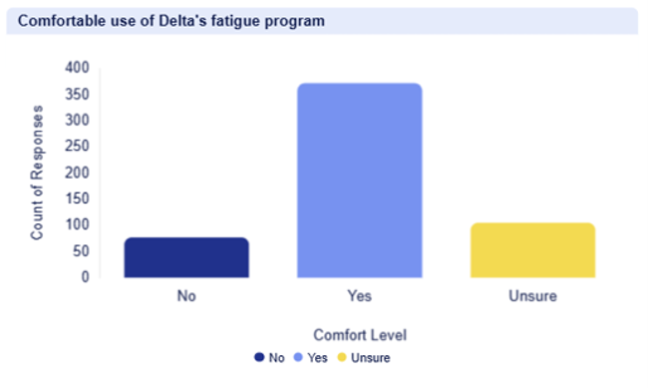 | 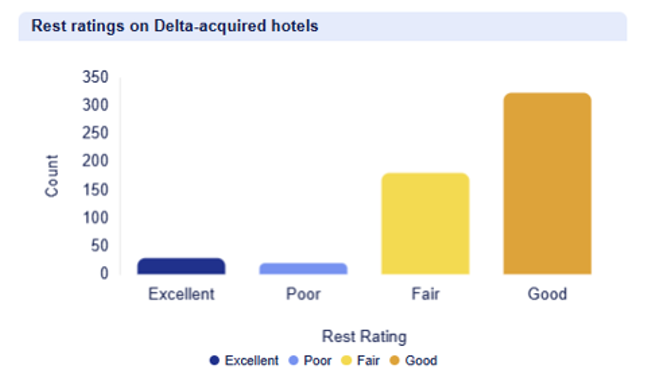 | 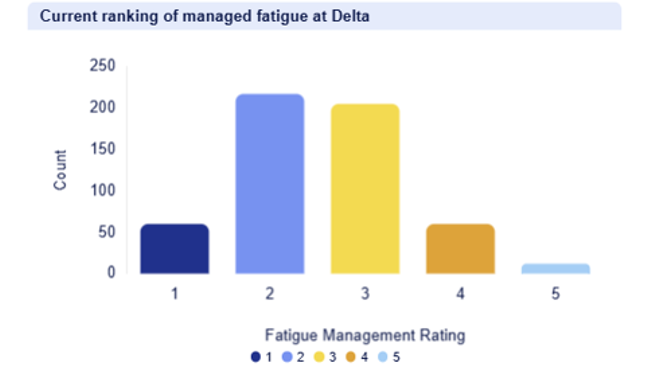 | 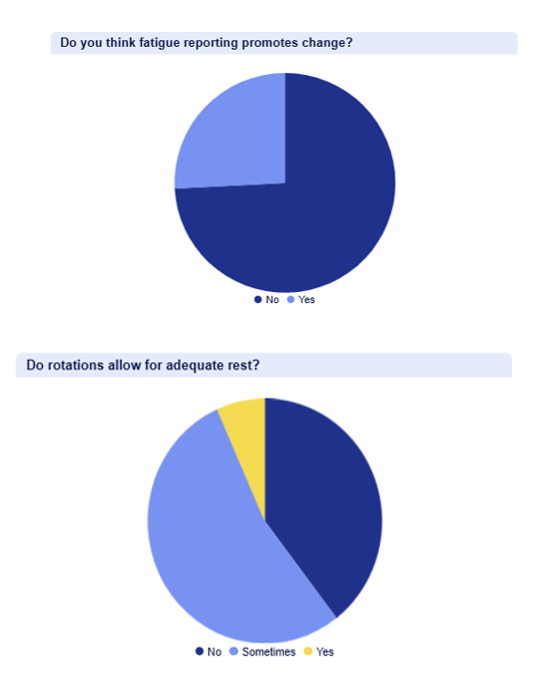 | 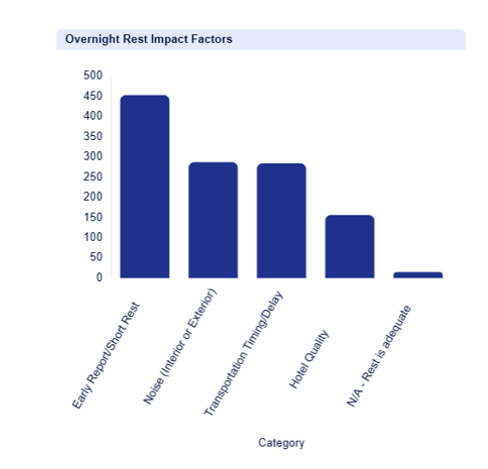 | After categorizing over 400 pilot responses to the survey, here are the primary drivers of pilot fatigue. These do coincide with the same FRB themes from our continued data tracking and collection of fatigue reports since 2022.
| 6. Top Drivers of Fatigue from the Survey
- Schedules
- Consecutive 10+ hour days
- Last day penalty laps
- Reroutes
- Short Layovers/Rest Availability/Hotel Issues
- Insufficient 10–13-hour range
- Long transportation times
- Lack of time for sleep, food, and exercise
- Noisy hotels
- Climate issues
- Circadian Issues
- Late/Early and Early/Late swaps of schedules
- Insufficient recovery time after red eyes
- Operational Issues
- Lack of proactive fatigue management with no perceived improvement from the company
- High dependency on a perfect operation for schedules to work
- Understaffing
| 7. What pilots on the line are saying...
“Pilots are the only safety barrier.”
“Company reacts instead of preventing fatigue.”
“Fear of consequences still exists.”
“Trips are built to fail when anything goes wrong.”
“The underlying issues with staffing and rotation construction/optimization make a 3-4 day trip nearly impossible… without at least the thought of a fatigue call.”
“I believe Delta will impose negative consequences if I use the fatigue program.”
| 8. Fatigue Risk Level Chart
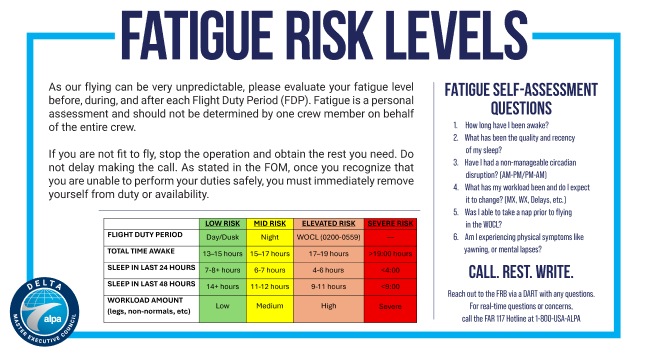
- Working with other Part 121 carriers, we developed a risk level chart and a questionnaire when evaluating your fitness. This helps the pilot make an appropriate decision and/or risk assessment based on the individual pilot's history. This chart can be found in crew room TVs and on your iPad.
Click on the image below to expand it.
|  |
This is a product of the Fitness Review Board.
If you no longer want to receive alerts from Delta MEC, you may unsubscribe.
|
|